
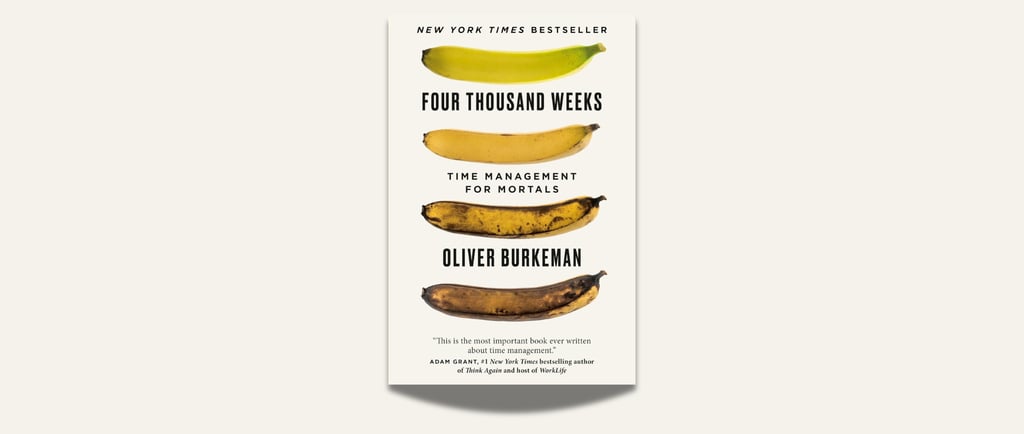
Four Thousand Weeks by Oliver Burkeman
Missing out is the whole point.
7/13/20264 min read
The math that changes everything
I have about 4,000 weeks on this earth if I'm lucky. Not infinite time to squeeze in every ambition, every trip, every version of the life I could be living. Just a number, and it's smaller than it sounds.
That math is the whole argument of this book. The harder I try to master my time and feel fully in control of it, the worse I feel: rushed, behind, never caught up. The moment I stop fighting my limits and start working with them, life gets more meaningful, not less. That's the paradox running through the entire thing, and it rewired how I think about my to-do list.
The joy of missing out
Here's the part that actually landed: I will never get it all done. Not eventually. Not with a better system. There's an ocean of things worth doing and a spoonful of time to do them in. Once I accept that, every choice I make stops being a compromise and starts being a statement. I'm not missing out on the other ten thousand things I could be doing. I'm choosing this one thing, on purpose, because I only get to choose a few.
That reframe has a name: the joy of missing out. It's the flip side of FOMO, and it's the difference between feeling cheated by your limits and realizing your limits are what make any of your choices mean something in the first place.
Cosmic insignificance therapy
The section that hit hardest wasn't about productivity systems at all. It was about how small I actually am. Zoomed out to a cosmic timescale, nothing I do matters all that much, and that's supposed to feel like bad news. It doesn't. It feels like putting down a bag I didn't realize I'd been carrying. I don't need my life to be remarkable. I just need it to be mine.
Why I write this at all
Richard Bach's line stuck with me too: you teach best what you most need to learn. That's basically why I keep writing this blog. I'm not handing down wisdom from a mountain. I'm working out what I actually believe, in public, one book at a time.
Key Takeaways
Habits to build
Run two to-do lists. One "open" list holds everything on your plate, and it will always be too long. That's fine, it's not meant to get finished. A second "closed" list caps you at ten items, and you can't add a new one until you finish an old one.
Work on one big project at a time. One work project, one personal project, max. See it through before starting the next instead of spreading yourself across five half-finished things.
Protect your first hour. Do the work that actually matters to you before the rest of the world gets a vote in how your day goes.
Cap your work in progress at three items. Everything else waits its turn.
Decide in advance what you're willing to fail at. Nominate the areas where you won't chase excellence, so you're not blindsided when they slip.
Trade balance for seasons. Instead of trying to be great at everything simultaneously, let one area go quiet while you pour into another, then swap.
Pick your causes on purpose. You can't carry equal concern for every good cause on earth, so choose a few and actually show up for them instead of feeling vaguely guilty about all the rest.
Pay attention to the boring parts of your day. A different walk home, a camera in your hand, a new route to work. Anything that pulls your attention back into the present instead of the next thing.
Exercises to try
Do Nothing meditation. Set a timer for five or ten minutes, sit down, and stop trying to do anything. Every time you notice you're doing something, even breathing on purpose or thinking, stop doing that too.
Spend three hours with one painting. Borrowed from an art history assignment: sit with a single piece of art for three hours straight. It forces you to actually stay somewhere instead of consuming and moving on.
Run cosmic insignificance therapy on yourself. Actually sit with how little your life registers on a cosmic timescale. Don't flinch from it. Notice that the feeling underneath the discomfort is relief.
Quotes to live by
"You teach best what you most need to learn."
"Work expands so as to fill the time available for its completion."
"A plan is just a thought."
"Stay on the bus. Stay on the fucking bus."
"The average human lifespan is absurdly, terrifyingly, insultingly short."
How it connects to the Bible
Burkeman's whole case is that limits aren't a design flaw. They're what makes any single choice mean something. The Bible got there first, and got somewhere better.
"Teach us to number our days, that we may gain a heart of wisdom" (Psalm 90:12, NIV) isn't a productivity hack. It's a prayer. Knowing your days are numbered isn't supposed to make you anxious. It's supposed to make you wise about what you spend them on.
And once you're spending a finite life on purpose, the question stops being what should I optimize and starts being who is this actually for. You don't get enough time or enough capacity for care to chase every good cause on earth. So you might as well spend some of your four thousand weeks on the one thing that outlasts them: introducing people to Jesus.